
static traits
Perception
Personality
Frame of Mind
Habitude
Function Style
Brain Orientation
Preferred Learning and Working Style
Neurology of static traits
Synaptic plasticity is the mechanism by which the brain adjusts the wiring at the microscopic level whereas neuroplasticity is the overarching concept describing the brain’s ability to adapt and rewire itself at all levels, from single synapses to entire neural networks
Synaptic plasticity affects neural pathways becoming the physical basis for habits, skills and traits through the strengthening or weakening of connections between neurons. The process involves altering the number of neurotransmitter receptors such as N-methyl-D-aspartate (AMDA) which is responsible for short-term changes in synaptic strength and α-amino-3-hydroxyl-5-methyl-4-isoxazole propionic acid (AMPA) receptors regulate long-term maintenance of synaptic changes required for long-term potentiation (LTP) and long-term depression (LTD).
Synaptic plasticity is not static but functions like a volume control that can change rapidly (short-term) or persist for years (long-term). As Hebbian theory puts it, “cells that fire together, wire together”. This principle suggests that repeated, synchronized activity between neurons enhances their connection.
Neurological basis of maturity happens between 18 – 21 years of age. The effect of Long-term potentiation (LTP) strengthens connections due to synaptic plasticity, during this phase of life where personality and behavioral occurrences are not seriously taken into consideration. It is thus considered the traits identified are static.
static trait - perception
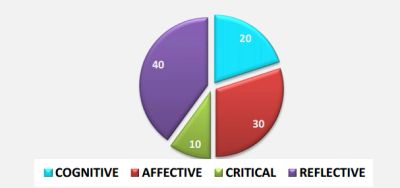
traits of perception
Reflective Perception:
- Observe and copy a stimulus,
Cognitive Perception:
- Retrieve the information from prior knowledge
Critical Perception:
- Evaluate received information & evaluate the cause and effect,
Affective Perception:
- Accept either as favorable or unfavorable information.
Neurobiological process
Perception as a trait in behavior, describes how an individual's mind responds to stimulation. Neurologically, Brain uses two complementary strategies: Bottom-up processing, which builds perceptions from raw sensory stimulations, and top-down processing, this uses multiple processing within brain. This means perception is a cognitive mechanism where brain uses prior knowledge, experience expectations and from context to construct an image (not visualization) of the information or stimulation to interpret.
Beyond Left & Right Brain Orientation
We all have learned about Left Brain and Right Brain Orientation. But beyond this left-right classification there is unique process in brain formation pertaining to myelination and axon refinement due to neuroendocrine activity.
Research indicates left-right side-specific neuroendocrine signaling plays a critical role in brain development. The recent research challenges the traditional “cross association” model, and a novel mechanism involving side-specific neuroendocrine signaling, where certain hormones from hypothalamus and pituitary gland can act on lateralized receptors. This anomaly produces temporary electro-neurochemical imbalances between left-right hemisphere communication connecting corpus collosum. The microstructural mechanism of corpus collosum and its thickness exhibits a dynamic, age-dependent relationship with autism spectrum disorder (ASD), characterized by early overgrowth followed by relative undergrowth or stabilization in later childhood. The corpus collosum thickness variations are linked to abnormalities in myelination and axon refinement and in-utero stress conditions produce abnormal angular deviations and enlarged fingerprint ridges. This neuro anatomical process defines reciprocity of brain
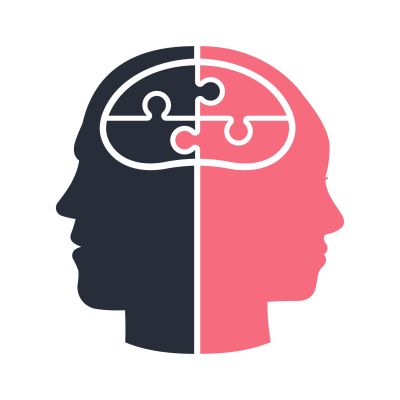
Static trait - brain Orientation

Brain Orientation
We all have learned about Left Brain and Right Brain Orientation. But beyond this left-right classification.
Research indicates left-right side-specific neuroendocrine signaling plays a critical role in brain development. The recent research challenges the traditional “cross association” model, and a novel mechanism involving side-specific neuroendocrine signaling, where certain hormones from hypothalamus and pituitary grand can act on lateralized receptors. This anomaly is thought to be creating functional hemispheric asymmetry that causes crossover to functional attributes
Brain Functional Asymmetry
RGB Analyzes capturing hemisphere functional asymmetry and defines the brain into five orientations.
Left Brain Orientation
Described as analytical, categorical, focused on control, rules, efficiency, Dominant in language, and sequential/logical processing, form of conservatism.
Right Brain Orientation
Dominant for visuospatial processing (big picture thinking, imaginative), Emotionally logical and Musical/Artistic ability, responsible for holistic, contextual and not emphatic perception – attuned to depth, ambiguity and the interconnections of life.
Left-reciprocal Orientation
Oscillating between left sequential processing and right brain visuospatial processing. Under normal conditions the brain remains at left brain attributes and reciprocity does not take place. Other attributions are Curiosity driven, increasingly mechanistic and attuned to ambiguity and goes by contextual perception.
Right-Reciprocal Orientation
Reverse processing from fascination to reality. Under normal conditions the brain remains at right brain attributes and reciprocity does not take place. Other attributes are being Emphatic, sequentially analytical, embodied understanding of continuity, tradition with rational control.
Balanced Brain Orientation
A combination of all three orientations. Person has no specific opinion and driven by the dominant Perceptual and Mind Framing process. Sides with attributes of left or right, depending on the context of activity in which the person is involved.
static trait - personality

Personality a Neurological Approach
Personality is understood neurologically as the manifestation of persistent individual difference in emotion, motivation, and behavior rooted in the brain’s neurological system. The shapers of personality are the Neuroendocrine system. It is done through dynamic, bidirectional communication between the brain and endocrine glands, by fine-tuning neural activity in circuits that govern emotion, stress response, and social interactions.
Neuroendocrine system integrates signals from the central nervous system and endocrine glands to maintain homeostasis and adapt to environmental challenges.
Decisive Personality
Decisive personality refers to the ability to make firm, timely decisions with confidence, especially in challenging or uncertain situations. It is a combination of functions that enables individuals to process information efficiently, consider alternatives, and commit to a course of action without being paralyzed with doubt.
Methodical Personality
Methodical personality refers to individuals who approach tasks, problems, and life with logical, systematic, and organized mindset. They thrive on structure, precision, and planning often breaking complex challenges into manageable steps to ensure accuracy and efficiency.
Impulsive Personality
Impulsive Personality refers to a pattern of behavior characterized by acting on immediate urges without considering consequences. Then tend to make decisions quickly driven by emotions rather than rational evaluation, recklessness while performing activities with a diminished threshold between thoughts and actions, leading to out-of-character behaviors.
Expressive Personality
Expressive personality refers to an individual’s natural tendency to openly display emotions, thoughts, and inner experiences through verbal and nonverbal communication. This personality type is characterized by high responsiveness and assertiveness, making them outgoing, enthusiastic, and emotionally expressive.
Summary of Neurological Background
RGB Analyzes treats personality as Genetic Habit because it is often rooted to genetic inheritance gene expression of endocrine activity during gestational age. Neuroendocrine system integrates signals from the central nervous system and endocrine glands to maintain homeostasis and adapt to environmental challenges.
Static trait - Frame of Mind

Multisensory integration as Mind Frame
Mind frame refers to shaping mindset, a low-level anchoring mechanism to organize information and respond to challenges at a later stage. It involves creating a temporary pathway connecting to emotion (limbic system) to the cognition (neocortex) based on the environmental input means it creates a makeshift image only for that purpose.
Frame of Mind: Academic
- A process of mind that influences the cognitive process as if decision made.
- The mind believes whatever is said or read is true and it is always true.
- Unconscious mind frames up to say “I see this as the law book says”
- Academic frame is highly rigid and inflexible and difficult and no excuse is accepted if the statement is violated.
Frame of Mind: creative
- A process of connecting mental images of past events or actions or on some information and going back & forth while in conversation or making some statements.
- It is a chaining up of events that might have occurred or a narration on some incidents bringing into current conversation expecting to convince about current situation.
- Difficulty in comprehending.
frame of mind: Active
- They pose with a blank face when someone gives instructions to do something
- A process of analyzing, creating and applying it practically for better understanding.
- Brain needs to synthesize every practical aspect means hands on experience to construct full knowledge or understanding
Static Trait - Habitude

Habit +Attitude +Aptitude
Habitude is a combination of three independent traits viz. Genetic Habit, Acquired Attitude and acquisition of Aptitude based on Attitude.
RGB Analyzes derive five traits based on how the micro-styles in combination of unconscious stimulants at 80% and 20% as displayed / observable behavior.
Genetic Approach to Habitude
Research shows Genetic Habit formation is an in-utero environmental condition where neuroendocrine process plays a critical role in fetus brain development. Attitudes developed under the gene influence temperament or sensitivity interlaced with cognitive & emotional feeling during gestational age, tend to form micro-level characteristic formation on behavior pattern. Aptitude is a part of this inherent natural propensity or talent for particular kind of performance or a linear unconscious attachment for learning suggesting pre-existing cognitive and physical processes.
It is worth noting the neuroendocrine system does not directly form habits in a way that learning and memory system do. But it plays a critical role in modulating behavior that can become habitual through its influence on motivation, reward and stress response.
TRAIT - language / arts
- Articulates thoughts, emotions and understanding especially when they are able to communicate verbally
- Artistic behavior by drawing, movement, or drama, or using body gestures to convey a message when it is difficult for articulate or limited or challenging.
Trait - Conscientious
- The individual display behavior of high inquisitiveness and curiousness in every matter
- They display a tendency for attention to detail, not intended to organizing and being systematic but go beyond what is required to know on any new & existing information
Trait - mechanical
- Approaches to tasks and problem-solving with a pre-framed mindset, with deeper philosophical or systematic understanding.
- If as a manager, or supervisor or instructor, a deviation from their pre-framed mindset on an instruction & if they feel a deviation from that action, the they take over tasks and try to do it by themselves
trait - Natural Science
- It is a Gestalt approach where the individual understands objects, tasks and problem-solving part by part before the systems understood in their entirety.
- The perception of reality is only understood from the collection of isolated parts.
Trait - Life science
- A life science behavioral approach emerges from interaction between living objects around, not inanimate objects like computers and machinery
- This is referred to as biosocial approach, treats biological and social factors as mutually constituting in the work environment and personal life.
Static trait - function style

Function Style of Mind
Functions style is a process of how an individual, be it child or adult, approaches to solve a challenging situation. It does not perform as a stand-alone trait. It is a hidden conscious process stimulating brain’s layered processing received by neuroendocrine, summed, transformed via nonlinear functions. Therefore, it always has 80% internal conscious processing and 20% outward observable activity.
Style - Analytical
- This refers to a systematic, data-driven approach to decision making and problem-solving.
- As a behavior it is looking for precise, objective and well-organized result, preferring to gather and analyze extensive data before taking action.
Style - introspective
- Introspective style refers to a pattern of regularly reflecting on one’s own thoughts, feelings, and motivations to gain deeper self-awareness.
- They often resort to colorful imaginations and complex inner thoughts, often falling into rumination, anxiety and self-criticism
Style - Interactive
- It is rooted in behavioral and neurological tendencies, to substantiate their logic, objectivity, assumptions and test scenarios are verified.
- It is like a dashboard or decision-support system for deep filtering of skeptical ideas which may often lack tangible proof.